7 Tips to Optimize Your Company’s Inventory Management
March 20, 2026

March 20, 2026

Inventory management is a strategic priority for many B2B companies. Whether you’re a distributor, wholesaler, or manufacturer, inventory often represents a significant portion of your tied-up capital.
Finding the right balance between product availability and cost control is essential to maintain profitability and ensure customer satisfaction. This requires implementing the right methods, tracking relevant KPIs, and maintaining clear visibility over stock movements.
In this article, we share 7 practical tips to help you optimize your inventory management and improve your overall business performance.
Effective inventory management ensures product availability while minimizing storage costs. Companies that maintain control over their inventory typically benefit from better operational efficiency and greater responsiveness to demand fluctuations.
On the other hand, poor inventory management can quickly create imbalances. In some industries, this may lead to losses due to product obsolescence or damage.
Stockouts, in particular, have a direct impact on business performance. They can lead to delayed deliveries, customer dissatisfaction, and even lost market share to better-stocked competitors.
Inefficient inventory management can impact several areas of your business:
Optimizing your inventory helps improve product turnover, streamline purchasing decisions, and secure your business operations.
Understanding customer demand is the foundation of effective inventory management. Analyzing sales trends, seasonality, and order patterns allows you to anticipate needs and adjust purchasing accordingly.
Better demand forecasting also improves your service level, meaning your ability to deliver complete orders on time.
To increase forecast accuracy, you can rely on several data sources:
Regular analysis of these elements helps you maintain optimal inventory levels.
Maintaining balanced inventory levels is critical to ensuring business continuity. The goal is to have enough stock to meet demand without overinvesting in storage.
To achieve this, companies must consider several factors: supplier lead times, sales frequency, demand variability, and storage capacity.
Defining the right order quantities is a key aspect of inventory management. Ordering too much increases storage costs, while ordering too frequently raises administrative and logistics expenses.
Some calculation methods help determine optimal replenishment quantities based on storage costs, ordering costs, and demand levels.
One widely used approach is the Economic Order Quantity (EOQ) model, also known as the Wilson formula.
This method calculates the ideal order quantity that minimizes total inventory costs while ensuring product availability. It balances two types of costs: acquisition costs (ordering, transport, delivery) and holding costs.
The EOQ formula is based on several variables:
The formula is:
EOQ = √((2 × D × S) / (C × H))
While this method relies on certain assumptions, it remains a valuable tool for structuring purchasing processes and improving long-term inventory management.
Not all products have the same strategic importance. ABC analysis helps classify items based on their contribution to overall inventory value.
In most companies, a small percentage of products generates a large share of revenue. These items require close monitoring to ensure consistent availability.
ABC classification typically includes three categories:
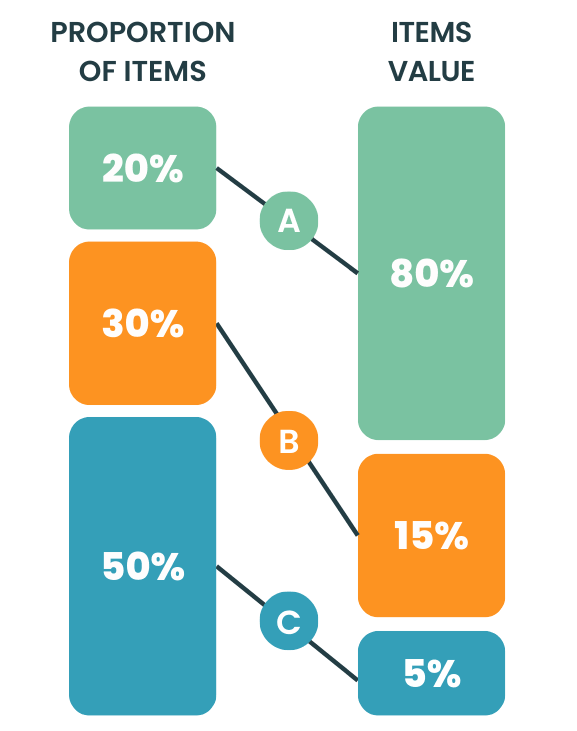
This approach allows you to focus your efforts on the most critical items.
Inventory counts are essential for maintaining accurate stock data. They ensure alignment between recorded inventory in your system and the actual physical stock in your warehouse.
The goal is to quickly identify discrepancies and correct them to improve data accuracy.
Over time, various factors can create gaps between theoretical and actual stock: data entry errors, losses, damaged goods, or unrecorded stock movements.
Beyond operational needs, inventory counting is also a legal requirement. Businesses are typically required to verify the existence and value of their inventory at least once a year.
Several inventory methods can be used depending on your organization:
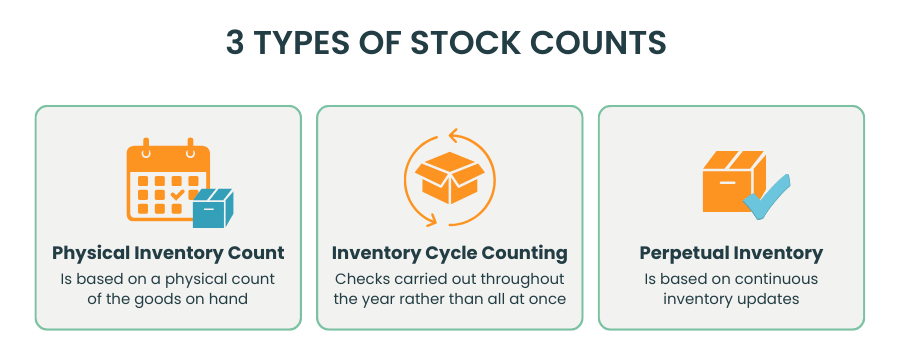
Perpetual inventory systems are often preferred by companies that want accurate, real-time tracking without disrupting operations.
Inventory management software can also simplify this process by enabling barcode scanning, automatic reconciliation, and quick discrepancy detection.
Data centralization is critical for efficient inventory management. When information is spread across multiple files or systems, the risk of errors and inconsistencies increases.
A centralized system allows you to track stock movements in real time, gain full visibility into inventory levels, and improve coordination between teams.
Automation, such as low-stock alerts or automatic updates of stock movements, helps reduce human error and improves data reliability.
Inventory management doesn’t rely solely on internal processes. Supplier relationships also play a key role in ensuring smooth operations.
Regular communication with suppliers helps you anticipate lead times, adjust order volumes, and respond more quickly to demand changes.
Strong collaboration also improves purchasing planning and strengthens supply chain stability.
Implementing best practices is essential to optimizing inventory management. However, these methods become difficult to apply effectively when data is scattered or updated manually.
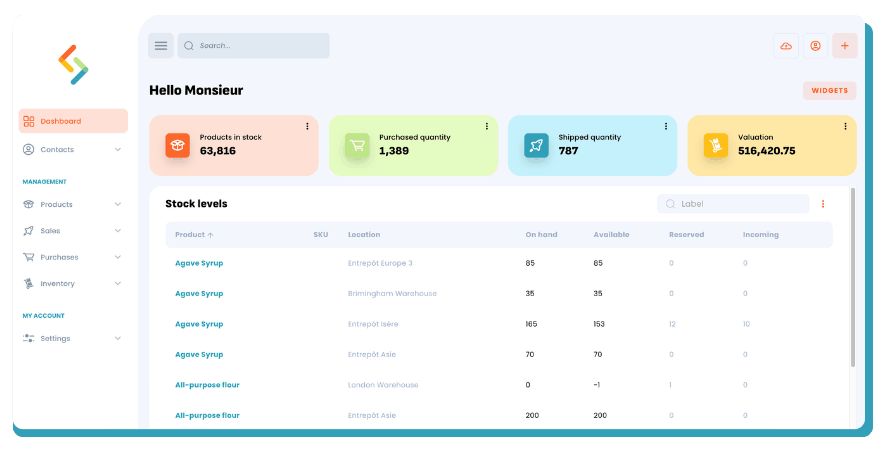
A dedicated inventory management system helps centralize information and simplify many operational tasks. Businesses can track stock levels in real time, plan replenishment more effectively, and reduce errors.
Stockpit is an inventory management solution designed for B2B companies. It allows you to:
By automating processes and improving inventory visibility, Stockpit helps businesses make better decisions and build more structured operations.
Optimizing inventory management is a key driver of business performance. Better demand forecasting, tighter control of stock levels, and stronger supplier collaboration all contribute to reducing costs and improving product availability.
However, implementing these best practices often requires the right tools. Businesses need clear visibility into their inventory, orders, and stock movements to make informed decisions.
An inventory management solution like Stockpit helps centralize data, track stock levels in real time, and automate many logistics processes.
By structuring your inventory management and leveraging the right tools, you can improve operational efficiency and support sustainable business growth.
Say goodbye to stockouts! Get your inventory valuation, monitor the inflow and outflow of products and keep track of your inventory.


